AI Has A Language Problem | A Reflection on Empire of AI by Karen Hao
I recently read Empire of AI by Karen Hao. The book is a recount of the beginnings of OpenAI, Sam Altman and how he’s been able to keep himself at the top of the AI industry.
She covers the legal set up of the organization, the drama between Sam and Elon Musk, Sam’s relationship with his family, particularly with his sister, the exploitation of both natural and human resources in developing countries. The overall consensus of the book is how OpenAI became an organization with an unlimited amount of resources who gets to define what AI actually is today.
ChatGPT only employs 15 world langauges above an 80% accurracy in their software. As things become more integerated with AI, these large language models shut out or force a large portion of the population to learn languages and other cultures that are better represented in the software.
One example from Empire of AI showed me how cultural values can shape AI safety decisions. ChatGPT suggested candy as a reward for children completing chores, but U.S. safety staff flagged the suggestion because of its potential association with child grooming. A European employee questioned whether this reflected an American cultural sensitivity rather than a universal concern.
That struck a chord with me. Growing up in New York, I identified strongly as Colombian, but living in Colombia has made me realize how deeply American my worldview is. Some of the issues that feel particularly sensitive to me in Colombia simply don’t carry the same weight here.
This question of language and cultural difference also reminds me of an interview I did with San Andrés reggae artist Prophet Negus. San Andrés, part of a Caribbean archipelago off the coast of Nicaragua, has three official languages: Spanish, English, and Creole. Despite being Colombian territory, the islands have strong historical ties to Britain, and Prophet Negus spoke about how language itself has become a source of division between the islands and mainland Colombia.
Studying Spanish Is One Thing. Speaking It Is Another.
You can study grammar, build your vocabulary, maintain a Duolingo streak, and still freeze when someone asks you a simple question in Spanish. That’s because conversation requires practice.
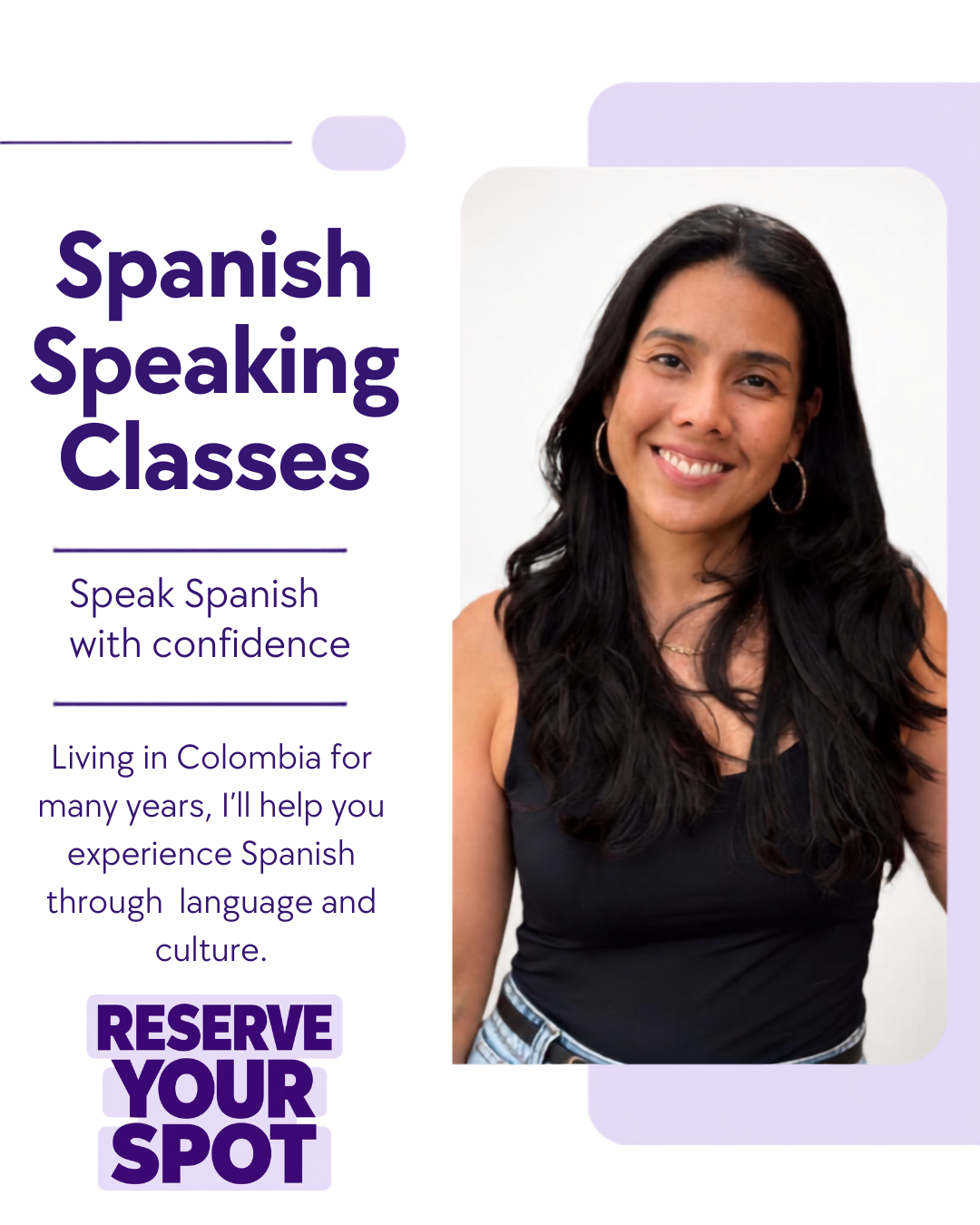
In my Spanish conversation classes, you’ll have a low-pressure space to use the Spanish you already know, build confidence, receive immediate feedback, and learn along the way. And since I’m based in Medellín, our conversations can also be an opportunity to learn about Colombian culture, music, food, travel, and everyday life.
No intensive course. No long-term package. Just real conversation and a chance to actually speak Spanish.
Book your class here: https://calendly.com/colombianjukebox/conversationpractice
El Chocó Needs Your Attention | 2026 Earthquake in Colombia
On August 10 at 7:34 AM, Colombia was struck with a massive 7.4 earthquake. The epicenter was in a small village in the department of El Chocó called San José del Palmar. The massive earthquake devastated cities as far as 300 kilometers away from the epicenter, like Cali, Manizales, and Pereira. And although these cities experienced catastrophic loses, they are also large cities that count on social infrastructure that allows for them to recieve rescue much quicker.
San José del Palmar and the surrounding areas that were affected didn’t recieve any rescue until four days after the earthquake. El Chocó is one of the country’s poorest and most neglected regions. And amidst all the adversities, this region has given Colombia a lot to be proud of.
El Chocó needs your attenion.
What Tourist Get Wrong About Medellín
A follow up to my most viral YouTube video.
What Language Do Bilingual People Actually Think In?
I am a native Spanish and Englisih speaker and I am often asked what language I think in.
Spanish is my first language. It was the language where my first safe-spaces were constructed in. It is not a coincidence that all my romantic relationships have been in Spanish.
English came later. As I grew older and more indepedent, it was how I consumed media and music. It was also the common language between friends. I also think about economic transactions in English.
After moving to Colombia in 2018, my bilingualism has helped me understand parts of myself that perhaps I wasn’t able to see while living in New York.
Sports Make Us Love Where We Come From
The Knicks won and I was far away from all the excitement going on in my city. I felt homesick during the entire NBA post season and it made me feel things I had never felt for New York. After moving to Colombia in 2018, I had to come to terms with my Americanness. It hasn’t always been easy. Typically, the demonym American is associated with skin color and privilege. I’ve learned that is not the case.
As much pushback as we may face from those in power, and as much as some may try to strip us of our identities and our rights, American culture, at its core, has always been inclusive. It has always made space for people who, for one reason or another, have felt like outsiders within their own.
First Generation Americans, Are We A Problem?
As more First Generation Americans move to Latin America searching for affordability, cultural belonging, and a better quality of life, many of us don’t realize that we may also be bringing the same American values and behaviors we claim to dislike.
More often than I’d like to see, there is a new socila media influencer sharing their new discoveries about their new and wonderful life in Latin America. A lot of it is concentrated on how much cheaper and affordable life can be in Latin America if you make your wages in United States Dollars or Euros. But doesn’t the ability to earn in a stronger currency and consume in a developing country’s economy create a structural power advantage? And don’t those power advantages reinforce colonial patterns?
On American Hustle Culture
Hustle culture mentality had me by the neck a few weeks ago. There weren’t enough hours in the day to get to everything I needed (wanted) to get done. This wasn’t the first time I felt this. Once I realized I was bugging I began thinking about how I got into this vicious cycle of feeling like it is never enough.
The steps towards hustle culture start early in the United States. A lot of Americans start off with an allowance at the age of 8 or 9. Kids use the money their parents give them for completing their chores to buy snacks after school or save it to buy something bigger at a later time. Programs like Bring Your Kid to Work Day and Summer Youth Employment Programs (SYEP) are there to teach us the importance of making money at an early age.
I certainly learned a lot from this culture, however, after living in Colombia for so long, I see the contrast in lifestyle. The hustle is reserved for adults in Colombia. Jobs that are typically done by teenagers and young adults like supermarket cashier and retail are executed by grown adults. Family usually takes the economic responsibility for children and young adults with the hopes that they concentrate on their studies in order to secure better job employment opportunities. Unfortunately, it doesn’t always work out that way in Colombia.
Amigo, el ratón del queso
Medellín continues to make headlines. On March 27, 2026, the body of Erick Molina, an American Airlines flight attendant was found 100 kilometers south of Medellín. Erick had been a victim of a very popular drugging scam in Medellín: Scopolamine. It is a natural drug that is found in the Brugmansia plant family. The plant is most commonly known as floripondio, or more appropriately, borrachero. On occasion, doctors use it to treat motion sickness, but if ingested in large quantities, a person loses their ability to make decisions and can voluntarily give up their personal information. There have been countless news articles, documentaries, and interviews made about the dangers of this drug.
Danger is relative. Gun violence is something to be worried about in the United States; not so much in Colombia. Colombia has it’s own unique set of dangers that can affect you if you aren’t careful. Your best bet is not to look for sex and drugs. Locals would consider you are “giving papaya” and pursuing the quickest way down the Medellín crapshoot if you choose any of the later activites.
But “giving papaya” isn’t the only way to get yourself in trouble. Often times, people romanticize Latin American hospitality. People like to think that people are more hospitable, kind, and warm. While that might be true, it is a proven method local criminal organizations use to earn your trust and commit their crime. Please be cautions because amigo, el ratón del queso!
What Do New Yorkers Think is Normal That Other People Find Weird?
I always knew New York was different. I really never came to understand what that meant until I moved out of the city. The first time was in college. I went to a university in a rural town in Upstate New York with a population of about 12,000 people. The difference I noticed then was the diversity. In college, everything seemed so flat. Everyone was tuned into a frequency I couldn’t seem to pick up. The second time was in 2018 when I decided to move to Colombia. And now, when I return the differences are stark and some of them just straight up weird.
I wanted to see if I was the only one who thought so too so I asked Reddit. The answers didn’t disappoint!
Latest Posts
AI Has A Language Problem | A Reflection on Empire of AI by Karen Hao
I recently read Empire of AI by Karen Hao. The book is a recount of the beginnings of OpenAI, Sam Altman and how he’s been able to keep himself at the top of the AI industry. She covers the legal set up of the organization, the drama between Sam and Elon Musk, Sam’s...
Studying Spanish Is One Thing. Speaking It Is Another.
You can study grammar, build your vocabulary, maintain a Duolingo streak, and still freeze when someone asks you a simple question in Spanish. That’s because conversation requires practice. In my Spanish conversation classes, you’ll have a low-pressure space to use...
El Chocó Needs Your Attention | 2026 Earthquake in Colombia
On August 10 at 7:34 AM, Colombia was struck with a massive 7.4 earthquake. The epicenter was in a small village in the department of El Chocó called San José del Palmar. The massive earthquake devastated cities as far as 300 kilometers away from the epicenter, like...
Reserve Your Spot Now!